
An environment that appears visibly clean is not always hygienic
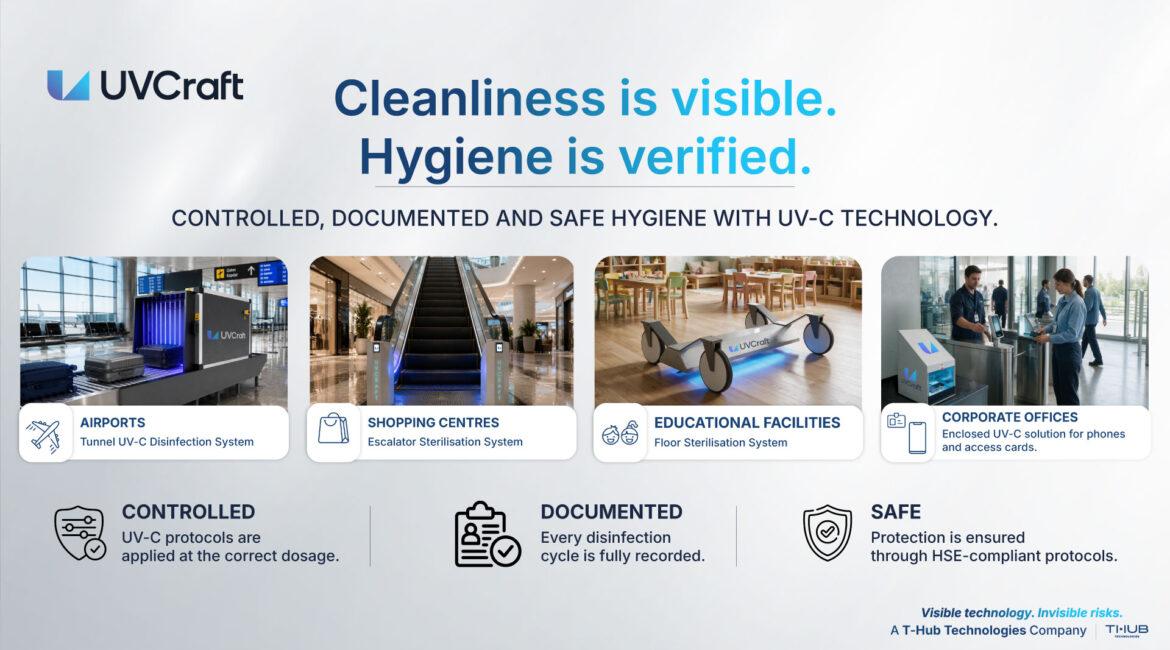
There is a widely accepted assumption in the management of corporate premises and public spaces: if an area looks clean, it is clean. Floors are mopped, surfaces are cleaned, and the absence of visible dirt is taken as an indication that hygiene standards have been met. However, this assumption presents one of the most persistent and least addressed challenges in professional hygiene management for facility managers, cleaning service providers and operational teams.
The reality, however, is more complex. Hygiene risks are not always visible. In environments where hundreds, or even thousands, of people come into contact with surfaces every day, there can be a significant discrepancy between the surface’s appearance and its actual state of hygiene.
The Difference Between Cleanliness and Hygiene
Cleanliness and hygiene are interrelated concepts but do not mean the same thing. A surface may appear spotless, having been completely rid of dust, stains and visible residues. Nevertheless, it may harbour a level of contamination that cannot be detected by standard visual inspections. This is particularly important in the case of high-touch surfaces, where the frequency of contact between cleaning sessions is far higher than what traditional cleaning programmes can accommodate.
In settings such as airports, shopping centres, hotels, schools and mosques, escalator handrails, door handles, communal seating areas, prayer mats, fingerprint scanners and baggage handling areas are in almost constant use. Between scheduled cleaning rounds, contact continues to accumulate on these surfaces without any hygiene measures being carried out. Whilst the appearance of the surfaces remains the same, their hygiene status has changed.
Why Is Visual Assessment Insufficient?
Professional cleaning teams work according to schedules designed to be realistic and operationally sustainable. However, these schedules cannot fully account for the constantly changing nature of contact in heavily used public spaces. A surface cleaned at 08.00 in the morning at a transport hub with heavy footfall may have been exposed to a large number of touches by 09.00. The next scheduled cleaning may not take place until several hours later.
This does not mean that cleaning protocols are inadequate. It is an operational reality stemming from the nature of heavily used environments. The question that needs to be asked here is not whether the frequency of cleaning should be increased. Resource and operational constraints often make this impracticable. The real question is how to manage the hygiene gap that arises between two cleaning sessions.
The Role of Technology in Bridging the Hygiene Gap
Technology-enabled hygiene is one of the emerging areas of professional facility management. Rather than replacing manual cleaning, it offers tools that complement and enhance the effectiveness of existing processes. UV-C disinfection technology is one such tool and comes into play where visual cleaning falls short.
When UV-C light is applied to surfaces under the right conditions, it interacts with microorganisms at a molecular level. This effect provides a level of protection that cannot be achieved through traditional cleaning methods alone. More importantly, this process targets surfaces that, whilst appearing clean, harbour a hygiene burden as a result of repeated contact. In other words, UV-C acts as an additional layer of hygiene management that operates beyond the limits of what can be assessed by the naked eye.
How Does UV-C Technology Support Professional Cleaning Operations?
UVCraft is a professional UV-C hygiene technology brand developed to help cleaning and facilities management teams manage hygiene risks in high-contact environments. Its approach is not to compete with professional cleaning services, but to work alongside them.
By integrating UV-C technology into existing hygiene routines, facility teams can implement an additional hygiene process for surfaces that continue to be heavily used between cleaning sessions, even though they are cleaned in accordance with the schedule. This approach is particularly important for environments where cleaning frequency cannot be increased due to operational conditions or resource constraints, yet hygiene standards must still be maintained.
Environments Where the Difference in Visibility Matters Most
The difference between apparent cleanliness and the actual hygienic condition of a surface takes on greater operational significance in environments characterised by heavy footfall, diverse user profiles and frequent contact with surfaces.
Hotels face an ongoing challenge. Surfaces that guests come into contact with in lobbies, lifts and communal areas are in constant use throughout the day. Whilst visible cleanliness is ensured through regular housekeeping and cleaning procedures, the frequency of contact between these procedures is very high.
Mosques and places of worship bring large numbers of people together in shared spaces. Prayer rugs, in particular, are subject to a high level of contact during peak times. Traditional deep-cleaning programmes, however, may not always be compatible with the frequency of use.
Schools and nurseries are environments where young children come into close and frequent contact with floors and shared materials. Maintaining hygiene standards in these areas requires a planned and comprehensive approach to surfaces that are in constant use throughout the day, even if they appear clean.
Airports and transport hubs have surfaces that are used by thousands of people from different regions within a short space of time. Baggage handling areas, seating areas and shared equipment are among the surfaces with the highest frequency of contact in public settings.
In each of these environments, the ‘hygiene gap’—the period of time between one cleaning of a surface and the next—is a key operational factor. Furthermore, in none of these areas is visible cleanliness alone sufficient to assess the hygienic condition of a surface.
Going Beyond the Visual Cleanliness Standard
For facility management professionals and cleaning service providers, the shift from visual assessment to technology-supported hygiene represents a significant transformation in terms of understanding and managing hygiene risks. This approach reflects a more comprehensive and proactive understanding of hygiene management, one that acknowledges the limitations of visible elements whilst also addressing unseen risks.
UVCraft supports this transformation with UV-C disinfection technology developed for real-world usage conditions in corporate and commercial environments. The aim is not to establish a new hygiene standard independent of existing processes, but rather to further strengthen the standards already maintained by professional cleaning teams by providing a solution to the gaps that visual inspection alone cannot address.